The Intelligent Envelope: How Commercial Glazing Drives Solar Management and ESG Returns
A building’s facade is no longer just a boundary between inside and out. In high-performance commercial construction, the envelope (particularly the glazed sections) does active work: managing heat, balancing daylight, and controlling acoustic conditions throughout the working day.
This shift from passive cladding to active envelope design is changing how developers and asset managers think about specification. Get the glazing right from the start, and you reduce operational energy costs, build toward Green Star certification, and have something concrete to report against ESG targets.
Here’s what this article covers:
- How Solar Heat Gain Coefficient (SHGC) affects cooling loads and energy bills
- Why natural light harvesting through biophilic design improves productivity and lowers carbon output
- How laminated glass and precision-fitted aluminium frames address acoustic demands in dense urban developments
- Why Green certification directly increases commercial asset value and reduces exposure to the growing ‘brown discount’
What Is Solar Heat Gain Coefficient and Why Does It Matter for Commercial Buildings?
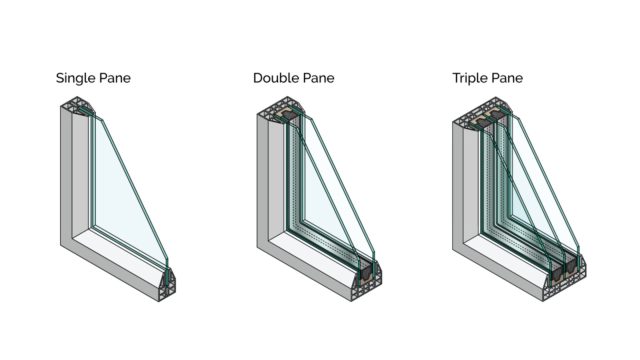
SHGC measures the proportion of solar radiation that passes through a glazing assembly and enters a building as heat. A lower SHGC means less solar heat gain, which takes real pressure off air-conditioning systems. In South Africa’s warm a climate zone, that translates directly to lower energy bills.
Solar heat gain is often the largest contributor to cooling loads in highly glazed commercial buildings. Standard clear glass carries an SHGC of around 0.70 to 0.87; meaning up to 87% of the sun’s heat enters the occupied space.
High-performance coated glazing can reduce this to between 0.25 and 0.35, cutting the solar heat load by more than half. In practical terms, this kind of reduction can bring cooling costs down by up to 30% in buildings with a significant glazed area.
The mechanism works through Low-E (low-emissivity) coatings applied to glass during the manufacturing process. These coatings reflect infrared radiation while allowing visible light to pass through, maintaining natural daylight without the heat penalty; pair that with thermally broken aluminium frames (which cut the conductive path through the frame itself) and the overall thermal performance of the system improves substantially.
Origin’s aluminium window and door systems are engineered to accommodate high-specification glazing packages, including double-glazed units with Low-E coatings and inert gas fills. For developers targeting SAFIERA Energy Ratings compliance or GBCSA Green Star credits under the Energy category, glazing SHGC is a primary input into energy modelling from the early design stage.
SHGC Performance Reference: Glazing Type Comparison
| Glazing Type | Typical SHGC Range | Cooling Load Impact | Best Application |
|---|---|---|---|
| Standard clear single-pane | 0.70 to 0.87 | High | Low-cost residential only |
| Tinted/reflective glass | 0.40 to 0.60 | Moderate | Mixed-use commercial |
| Low-E double-glazed unit | 0.25 to 0.35 | Low | High-performance commercial, Green Star projects |

Does Natural Light Harvesting Actually Improve Workforce Productivity?
Yes, and the research base is now strong enough that it’s starting to influence how commercial properties are valued. Biophilic design principles, including the use of daylight through well-positioned glazing, are consistently linked to measurable gains in employee output, well-being, and attendance.
The evidence stacks up quickly. A global study of 7,600 office workers across 16 countries found that employees in environments with natural elements reported 6% higher productivity and 15% better well-being compared to those in conventional settings. Research published in Scientific Reports in 2024 went a step further, confirming that natural light exposure improves energy, motivation, and mental resilience regardless of individual preference. The building therefore contributes measurable well-being benefits.
Natural light harvesting is not simply about aesthetics. High-transmission glazing, correctly sized and orientated, regulates occupants’ circadian rhythms (the body’s internal clock governing sleep quality, alertness, and mood). When circadian disruption is reduced, absenteeism falls. Data from the UK Green Building Council found that employees with consistent access to quality daylight reported 18% fewer sick days compared to those in artificially lit environments.
For commercial office developers in South Africa, this is a productivity and retention argument that strengthens the lease proposition. Tenants are increasingly factoring indoor environment quality into their space decisions, and landlords who can demonstrate measurable daylight performance hold a real advantage in the letting market.
Read more: The 6-Metre Sanctuary: How Biophilic Design and “The Great Opening” Define the 2026 Green Standard
How Does Acoustic Insulation Work in High-Density Urban Developments?
Effective acoustic performance in commercial glazing comes from two things working together: laminated glass, which uses a polymer interlayer to damp vibration, and precision-fitted aluminium frames that close off the gaps and resonances that let sound through.
Urban noise is a real issue for commercial developers in South African CBDs and mixed-use precincts. Standard single-pane glazing offers minimal sound reduction, usually 25 to 28 decibels. Laminated glass can reach 35 to 45 decibels of attenuation depending on the interlayer and glass configuration. That difference is clearly noticeable in any occupied office environment.
The frame system matters equally. Poorly sealed window and door frames create acoustic flanking paths that undermine even high-specification glass. Thermally broken aluminium profiles with EPDM rubber gaskets and multi-point locking create a compression seal around the entire perimeter of the glass unit. When both elements are correctly specified and installed, the combined assembly delivers consistent sound reduction that holds over the life of the building.
Origin Doors and Windows manufactures aluminium systems with the dimensional precision required to achieve these acoustic outcomes consistently across large-scale commercial installations. For developments adjacent to transport corridors or in high-density urban nodes, specifying laminated glass within a precision-fitted aluminium frame is the standard approach to meeting acoustic compliance requirements without compromising facade aesthetics or natural light transmission.
Read more: The Intelligent Envelope: Smart Glass, Solar Management, and the Future of South African Luxury
Does Green Building Certification Increase Commercial Property Value?
Green certification increases both rental income and resale value for commercial assets. And we now have local South African data to back that up, not just international benchmarks.
Green building certification is essentially a performance verification tool that gives the market confidence to price sustainability outcomes. GBCSA CEO Lisa Reynolds has been direct on this: certification gives owners, investors, and tenants the assurance that a building will actually deliver environmental and financial value over time. The flip side is just as important. GBCSA data points to a growing ‘brown discount’ applied to uncertified buildings by institutional tenants and investors who see them as operationally and financially higher risk.
The MSCI South Africa Green Annual Property Index, the results of which were released in 2025, provides the local evidence base for this premium. Certified office buildings in South Africa are outperforming uncertified ones on key return metrics. GBCSA’s Head of Technical Georgina Smit notes that sustainable finance providers and institutional investors are paying close attention to this data.
For property developers, the connection between intelligent envelope specification and ESG reporting has become much more direct. Green Star V2, piloted in December 2024, expands criteria to include energy, indoor environment quality, and socio-economic factors. Glazing systems that contribute to SHGC compliance, acoustic performance, and occupant wellbeing are central to the certification scores that underpin asset valuation. They’re not optional extras.
Frequently Asked Questions
What SHGC value should commercial buildings target in South Africa?
In South Africa’s warm climate zones, a target SHGC of 0.35 or below is recommended for primary east-, west-, and north-facing glazing. Buildings targeting 5-Star or 6-Star Green Star ratings typically require values at or below 0.25, achievable with spectrally selective Low-E coatings on double-glazed units.
Is energy modelling required for Green Star certification in South Africa?
Yes. Green Star ratings assess energy performance against a simulated baseline building model. Glazing SHGC, U-value, and visible light transmittance are primary inputs. Projects typically engage a GBCSA-accredited professional to run the energy model and identify the glazing specification required to meet the targeted credit score.
Can existing commercial buildings be retrofitted with high-performance glazing?
Yes. Glazing upgrades are among the most cost-effective retrofits for existing buildings seeking Green Star Existing Building Performance certification. The work typically involves replacing standard glass units within existing aluminium frames or undertaking a full frame and glass replacement where the current system does not meet acoustic or thermal performance thresholds.
What is the difference between Green Star V1 and Green Star V2?
Green Star V2, piloted by the GBCSA in December 2024, expands the certification criteria beyond energy and environmental performance to include socio-economic considerations such as local economic development and social equity. It also simplifies documentation requirements. Once the pilot phase concludes, V2 will replace V1 as the default tool for new building certifications in South Africa.
How does glazing specification support an ESG reporting framework?
Glazing performance data feeds directly into the environmental (E) pillar of an ESG report through energy consumption metrics and carbon emissions calculations. The social (S) pillar is covered by indoor environment quality data (acoustic performance, daylight levels) that links to occupant health and productivity outcomes. Green Star certification provides a third-party verified framework that consolidates all of this into a recognised, reportable standard.
Consult Origin Doors and Windows for Commercial Energy Modelling
The building envelope sits at the intersection of energy performance, occupant experience, and asset value. Glazing specification is a design-stage decision with direct consequences for Green Star scores, operational costs, and long-term property returns. As South African commercial property moves further toward verified ESG performance, the gap between certified and uncertified assets is widening.
Origin Doors and Windows works with developers, architects, and project teams on energy-modelling input from the design stage, providing technical specifications for aluminium glazing systems that support Green Star certification targets and SAFIERA Energy Rating compliance.
To discuss the performance requirements for your next commercial project, contact Origin’s technical team directly.