
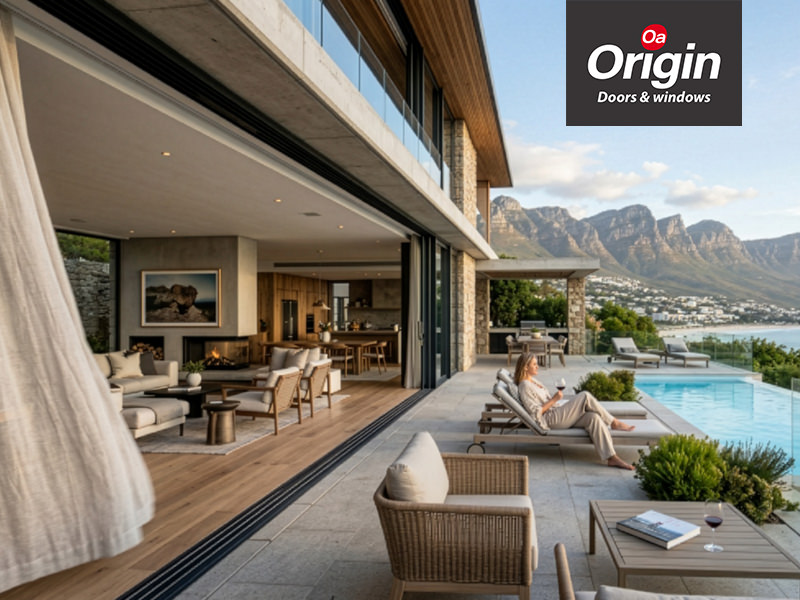
Integrated Luxury Home Protection That Blends Into Your Build
Open-plan homes with large glazed openings are defining high-end residential architecture across South Africa. The challenge is adding physical protection without breaking the clean, connected aesthetic that makes these spaces worth building.
Integrated architectural barriers offer a clear answer: slim aluminium profiles that retract out of sight and work alongside the building envelope rather than against it.
Key takeaways:
- How retractable aluminium barriers integrate at the design stage for a flush, invisible finish
- Why aluminium outperforms steel and timber for longevity and coastal durability
- How integrated systems preserve thermal performance under SANS 10400-XA
- What to specify at each project stage to avoid costly retrofits
What Is Integrated Luxury Home Protection?
Integrated luxury home protection refers to architectural barriers built into the structure of a home from the design stage, not added as afterthoughts. These systems use slim aluminium profiles that slide into recessed wall pockets, leaving no visible trace when open.
Retractable barriers differ meaningfully from surface-mounted alternatives. A surface-mounted option is always visible; an integrated system is only present when it needs to be.
Why Do High-End Homes Need Architectural Barriers?
Large glazed openings and open-plan living create spatial flow, but they also create points that benefit from physical protection. A barrier that compromises sightlines or adds visual clutter undermines the very qualities that define a premium home.
The concept of “fortress aesthetics” has long been at odds with biophilic design principles. Architects working on high-end residential projects in South Africa are increasingly specifying integrated systems that resolve this conflict from the outset.
How Do Retractable Barriers Disappear Into a Wall?
Retractable tracking systems allow barriers to slide fully into recessed wall pockets, removing them from view entirely when not in use. Recessed floor tracks eliminate trip hazards and maintain a flush indoor-to-outdoor transition.
This approach scales well for large-format openings. For 6-metre Palace Door configurations, a slim-profile retractable system preserves the spatial flow that a bulky aftermarket installation would obstruct.
Read more: The 6-Metre Sanctuary: How Biophilic Design and “The Great Opening” Define the 2026 Green Standard
How Does OriGuard Integrate Into the Building Envelope?
Architectural barriers, as a product category, are most effective when coordinated with the window and door system from the earliest design stage. This coordination matters because mismatched profiles, finishes, and track depths become permanent once the shell is complete. Specifying barriers alongside fenestration removes the guesswork and avoids the visual inconsistencies that undermine a refined interior.
OriGuard integrated solutions use the same powder-coated aluminium profiles as Origin’s window and door ranges, creating consistent sightlines across the entire façade. This single-supplier approach reduces coordination risk and ensures colour, finish, and profile alignment without relying on multiple trade handoffs.
Does Aluminium Outperform Steel and Timber?
| Feature | Aluminium (Integrated) | Steel (Aftermarket) | Timber |
| Lifespan | 30+ years | Prone to rust | Prone to warping |
| Coastal suitability | Naturally corrosion-resistant | Requires ongoing treatment | Degrades in humid conditions |
| Maintenance | Minimal | Regular rust prevention | Periodic repainting/sealing |
| Environmental impact | Secondary alloy uses ~5% of primary energy | Higher embodied energy | Deforestation risk |
| VOC off-gassing | Zero (powder-coat finish) | Dependent on coating type | Variable (treated timber) |
Aluminium delivers a lifespan of 30 or more years without the corrosion risk that affects steel or the warping that degrades timber in humid coastal conditions. For properties in KwaZulu-Natal or the Western Cape, natural corrosion resistance is a practical advantage, not a marketing point.
There is a sustainability dimension too. Secondary (recycled) aluminium uses approximately 5% of the energy required for primary production. Powder-coated finishes produce zero VOC off-gassing, supporting indoor air quality in enclosed living spaces.
How Do Integrated Barriers Support SANS 10400-XA?
Thermal performance in high-end South African homes is governed by SANS 10400-XA, the national standard for energy efficiency in buildings. Aftermarket barrier additions can compromise window seals and introduce thermal bridging, which directly undermines an energy rating achieved during design.
Integrated systems engineered alongside the window frame preserve the thermal envelope from the start. Slim bar profiles also maximise light transmission, reducing reliance on artificial lighting and reinforcing what specifiers call an “intelligent envelope”.
What Is the Specification Timeline for Architects?
Integrated barriers require coordination from the earliest project stage. Decisions made at the design stage determine whether the system achieves a flush, invisible result or defaults to a less refined surface-mounted alternative.
Stage-by-stage breakdown:
- Stage 1 (Design): Identify high-flow zones. Coordinate pocket depths with structural and energy consultants.
- Stage 2 (Shell): Detail recessed floor and head tracks. Confirm floor slab recesses for flush finish. Specify automation integration if required.
- Stage 3 (Manufacturing): Confirm colour choices available for full aesthetic continuity.
- Stage 4 (Finishes): Final installation and calibration for single-finger operation.
Read more: The Art of the Open-Plan: How a Bespoke Door System Defines a Luxury Home
What Happens If the Wall Pocket Was Not Planned?
Surface mounting is a retrofit option, though it does not achieve the same invisible result. Planning pocket depth at Stage 1 is the only way to deliver a truly integrated system.
What Finish Options Are Available?
The RAL colour palette available across Origin’s 340 Casement and Palace ranges applies directly to OriGuard barrier systems. Bronze and Ferro-Grain matte textures complement the natural materials common in contemporary South African residential architecture. Standard finishes are Bronze, Charcoal, White Powder Coated and Natural Anodised. Special colours are available
Matching the barrier to the window frame creates unified sightlines from every internal viewpoint. This is the practical definition of a “stealth finish” in architectural terms.
Frequently Asked Questions
Can OriGuard barriers connect to smart home automation? Yes, provided automation is specified at Stage 2. Integration with smart home sensors is possible when included in the shell documentation before track installation.
Do integrated barriers support SANS 10400-XA compliance? Yes. By preserving the thermal envelope of the window system, integrated barriers avoid the thermal bridging that can compromise an energy rating.
Are these systems suitable for coastal properties in South Africa? Aluminium’s natural resistance to corrosion makes it well suited to high-humidity coastal environments in KwaZulu-Natal and the Western Cape. No additional rust treatment is required.
What are the ongoing maintenance requirements? Periodic cleaning and lubrication of the tracking mechanism is sufficient for long-term performance. No repainting or rust treatment is needed.
What is the difference between integrated and surface-mounted barriers? Integrated systems slide into recessed wall pockets for an invisible result. Surface-mounted systems attach to the wall face and remain visible when open, which suits retrofit projects where pocket depth was not built in.
Architectural barriers specified from the design stage represent a measured response to the demands of open-plan living in South Africa. When coordinated correctly, they preserve thermal performance, maintain sightlines, and outlast alternatives prone to corrosion or warping. Physical protection does not need to compete with architectural intent.
For full technical specifications, visit the OriGuard product range or speak to an Origin specialist about integrating these systems into your next project.